A Napoleon wrasse named Toa is the first of his species at EPCOT
Disney Parks has introduced Toa, a Napoleon wrasse now living in the aquarium at The Seas with Nemo and Friends at EPCOT. The animal care team says it is the first of its species the pavilion has kept, and framed the addition around the fish's role on coral reefs: Napoleon wrasse eat crown of thorns sea stars, which strip living coral when their numbers climb.
There is a new face in the big tank at EPCOT. Disney Parks introduced Toa, a Napoleon wrasse, in a video posted to X on July 28, and the animal care team at The Seas with Nemo and Friends says he is the first of his species the pavilion has kept.


Key Details
- Animal: Toa, a Napoleon wrasse
- Home: The aquarium at The Seas with Nemo and Friends, EPCOT
- First of his kind: The pavilion has never housed a Napoleon wrasse before
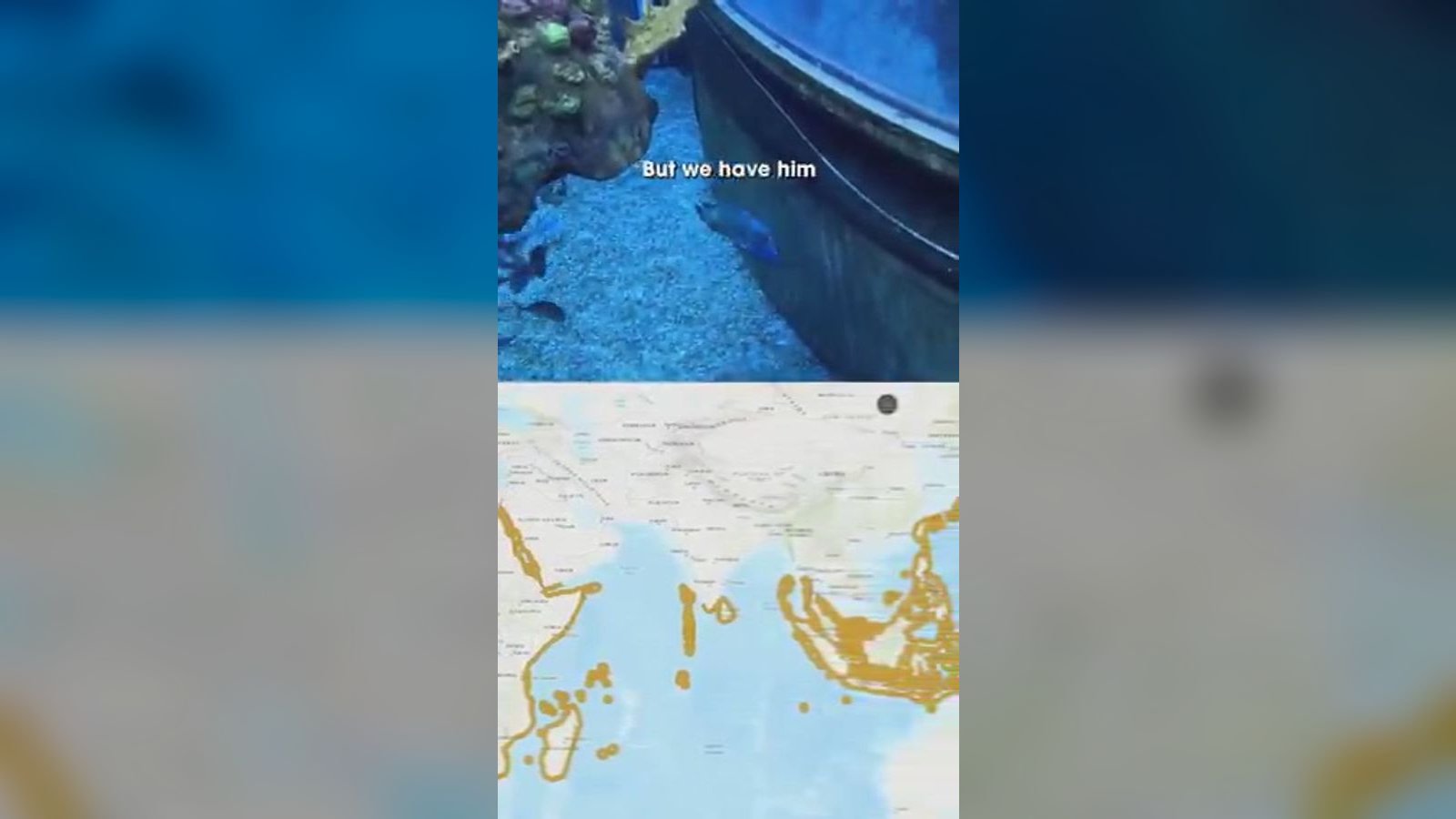
- Native range: The Indo-Pacific
- Status: Endangered in the wild
- Announced by: Disney Parks on X, July 28, 2026
- Source: https://x.com/DisneyParks/status/2082207947619274976
The first Napoleon wrasse at the pavilion
A member of the animal care team, speaking on camera in front of the aquarium window, puts it plainly: "We have introduced a new animal to our habitat, an animal that The Seas has never had before, and it's a Napoleon wrasse."
Napoleon wrasse are large, heavy-bodied reef fish with a distinctive humped forehead and a maze of blue-green lines across the face. They are among the biggest wrasses in the world, and they are endangered in the wild. Housing one in Florida is unusual on its own, since the species does not occur anywhere near the Caribbean reef the pavilion's aquarium is built to represent.
Where the species comes from
"They are indigenous to the Indo-Pacific area, but we have him here, which is an amazing opportunity to showcase an endangered species," the cast member says. The video cuts to a map with the range shaded from the Red Sea and the East African coast across the Indian Ocean to Indonesia, the Philippines and the reefs off northern Australia. None of it overlaps the Atlantic.
Why the name Toa
The name is a deliberate one. "Toa is a Maori word meaning warrior or victor, which is something that we hold close to our hearts because we want him to be a warrior and a victor for his species," the cast member says.
The crown of thorns problem
The conservation case the team makes for Toa rests on what Napoleon wrasse eat. "One of the main food items of the Napoleon wrasse is the crown of thorns sea star, and these sea stars are actually detrimental to coral reefs," the cast member says.
Crown of thorns sea stars feed on living coral. A reef can absorb a normal population; an outbreak can strip large sections of it. Predators that eat the sea stars, Napoleon wrasse among them, act as a brake on that. The video illustrates the point with a clip of one of the sea stars, a spiny purple and magenta animal, sitting on a plate of coral it is working through.
The team's framing follows from that. "So having Toa here explains to people that hey, they are what we need on the reefs, they are what we need to protect and keep alive so that our coral reefs can thrive and be an important part of our ecosystems."
What guests can look for
The aquarium at The Seas is one of the largest saltwater tanks in the world, and it is viewable from the Nemo ride vehicles, from the walk-up windows in Sea Base, and from the Coral Reef Restaurant. A single new fish in that volume of water is easy to miss, but a Napoleon wrasse is not a subtle animal: adults grow to several feet and the facial markings read from a distance. Guests who want the conservation story rather than the sighting should look for animal care talks at the pavilion windows, which is where the team delivers it.