Inside the pre dawn feeding routine at The Seas with Nemo & Friends
A Disney Parks video follows the EPCOT aquarium team through the morning feeding at The Seas with Nemo & Friends, which starts with the sharks before the pavilion lights come up. Sharks and rays each get an individual diet, delivered through target training and a feeding stretcher the animals learn to swim onto.

Long before EPCOT opens for the day, the aquarium team at The Seas with Nemo & Friends is already working through a back to back schedule of feedings for thousands of fish. A new Disney Parks video follows that pre dawn routine, from the sharks that eat first to the rays that swim onto a training stretcher for individually portioned diets.
Key Details
- Where: The Seas with Nemo & Friends, EPCOT
- What: A behind the scenes look at the daily aquarium feeding routine, published by Disney Parks
- When it happens: Before park opening, starting before the pavilion lights come up
- Animals shown: Sharks, eagle rays, black blotch rays, cownose rays and sea turtles
- How it works: Target training and a feeding stretcher let the team deliver an individual diet to each animal
- Source: https://www.youtube.com/watch?v=8vSfzqJbf9Q
The day starts before the lights do
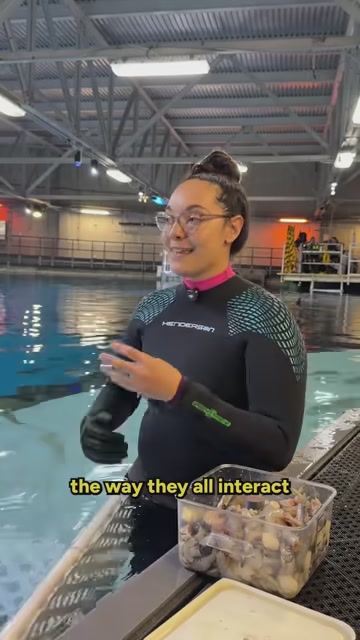
The video opens with a member of the aquarium team describing the order of operations. "And this is how we feed thousands of fish every day at The Seas with Nemo and Friends," she says. "First thing we do in the morning before the lights even turn on is we feed the sharks. We feed the fish early on as well. And then we kind of just back to back one feed to the next."
That sequencing is the whole shape of the morning. Rather than one large feeding, the team moves from group to group, which keeps the pace steady and gives each set of animals its own window before guests arrive in the pavilion.


Every animal has its own diet
The species list in the video runs well past the fish that give the pavilion its name. "We've got eagle rays, we do black, we do cownose and turtles," the team member says. "All of the sharks and rays have their own individual diets."
Individual diets are the reason the routine needs so many separate sessions. Each shark and ray is fed its own portion rather than sharing a general drop of food into the tank, so the team has to be able to reach one animal at a time inside a habitat holding thousands of others.
The stretcher and the target
That is what the feeding stretcher is for. The team describes the black blotch ray session step by step: "So that stretcher lowers the front. The target says, yep, keep coming. Come right here. Settle down. Get some food. And they head out on their rig."
The behavior is trained, not incidental. "They learn that that target is where food comes from," she says. "And then they also have a strong relationship with the stretcher itself." A ray that will voluntarily swim onto a known station and settle there is an animal the team can feed, weigh and check on without a chase.
Knowing the animals as individuals
The staff in the video talk about the residents by name and by temperament. "We know these guys really well as individuals," the team member says. "So we know their normal behaviors, their demeanor." At one point in a session she calls out an animal by name: "Oh, that was so good. Buttercup, you didn't go backwards."
Familiarity is a practical animal care tool. A keeper who knows what normal looks like for a specific ray is the person most likely to notice the day it is off, which is why individual recognition matters as much as the equipment does.
A morning the team calls an orchestra
Asked about the scale of it, the team member reaches for a musical comparison. "This is all just such an orchestra," she says. "There are so many parts. There's all the different animals and just that the way they all interact with each other is so complicated, so fun." Earlier in the video she is more blunt about one busy session: "I do love this session, especially the chaos."
Her closing line is about the routine itself rather than any one feeding: "It's really fun to get to just to see everybody and what they're up to every day."
Why this matters
The Seas with Nemo & Friends reads as an attraction and an aquarium at the same time, and the video is a reminder that the second half of that runs on a schedule guests never see. Visitors watching the tank in the late morning are looking at animals that were fed, checked and worked with hours earlier. The full video is on the Disney Parks YouTube channel.