Who Is X-Factor? The Comic History Behind the Government Mutant Team in 'X-Men '97' Season 2
X-Factor jumps into action in X-Men '97 Season 2, and the team's comic book history spans four decades of reinvention — from the original five X-Men posing as mutant hunters to Polaris and Multiple Man's detective agency. Here's how Marvel's government-approved mutant team has evolved since its 1986 debut, which also introduced Apocalypse.
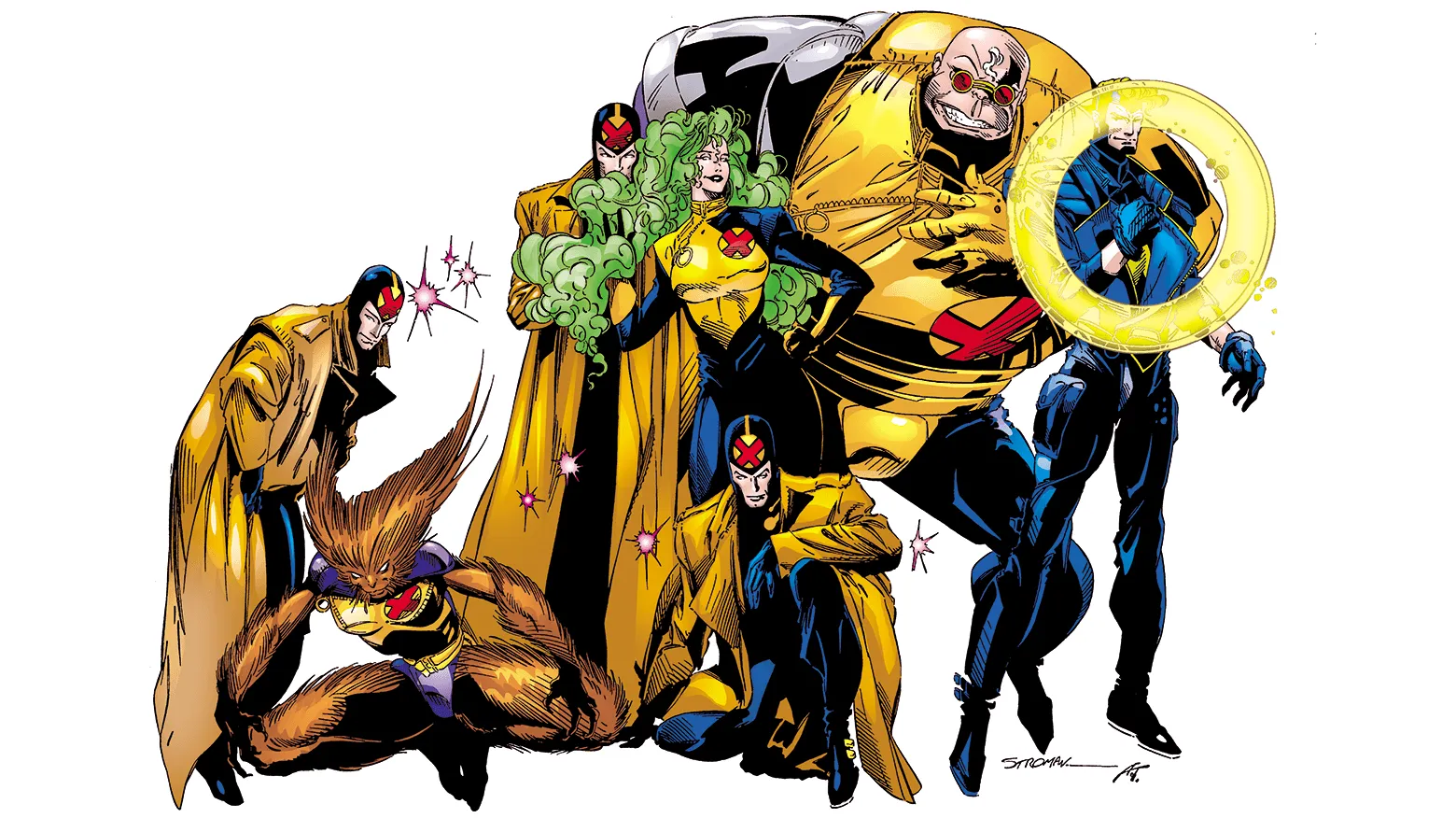
As X-Factor jumps into action in X-Men '97 Season 2, Marvel is spotlighting the team's four decades of comic book history. Unlike the outlaw X-Men, X-Factor has always tried to work inside the system — legitimized by government backing or corporate sponsors — and its ranks have included everyone from the original five X-Men to fan favorites like Polaris and Multiple Man.
Key Details
- First Appearance: X-Factor (1986) #1 by Bob Layton and Butch Guice
- Claim to Fame: Apocalypse made his Marvel Comics debut in X-Factor (1986) #6
- The Concept: A public-facing mutant team operating with government or corporate approval
- See Them Now: X-Factor features in X-Men '97 Season 2, streaming on Disney+

The Original X-Factor: The First Five X-Men, Reunited
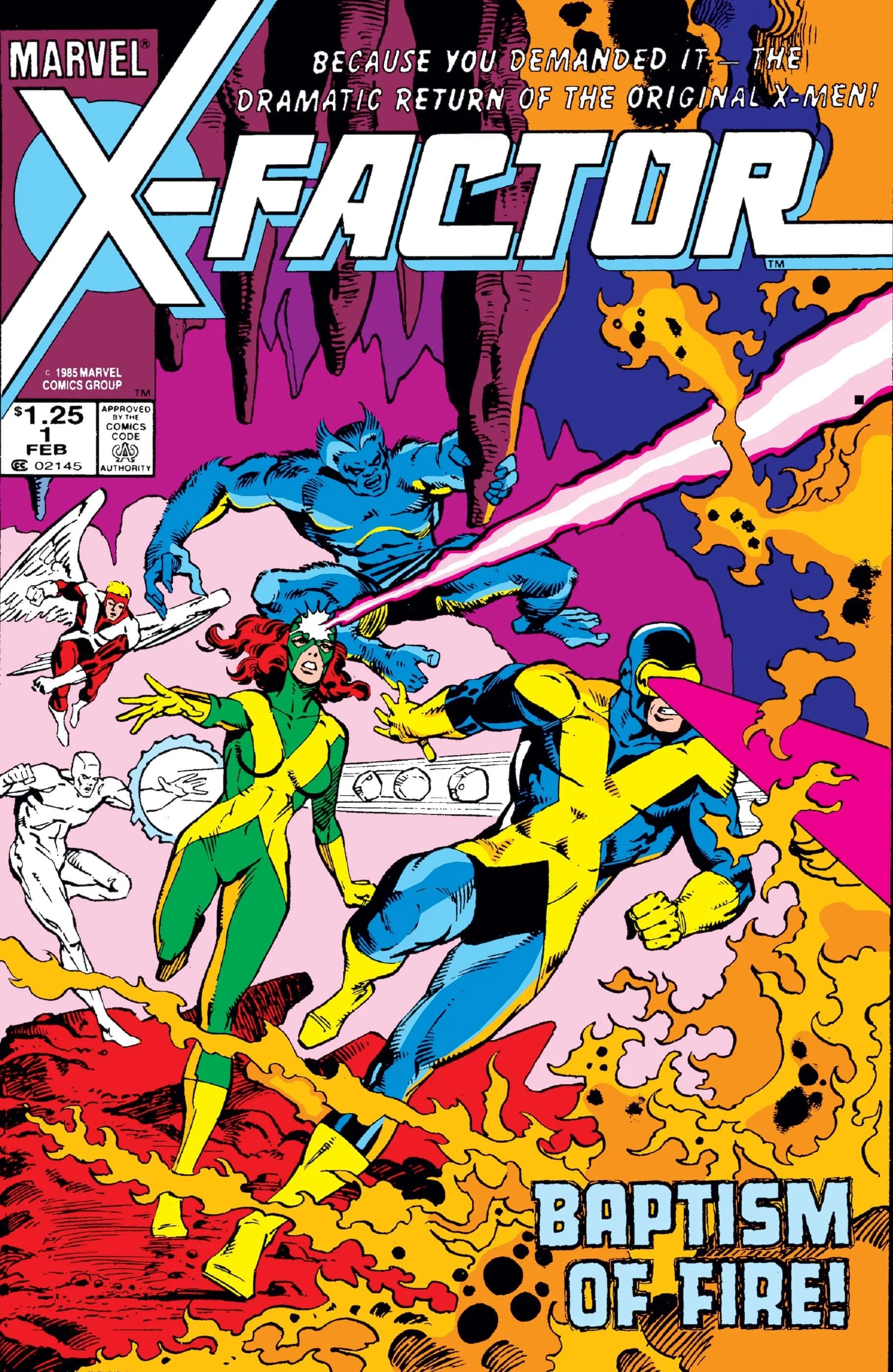
The original X-Factor formed in X-Factor (1986) #1 when the first class of X-Men reunited. After leaving the X-Men, Cyclops, Beast, Iceman, and Angel banded together upon learning their old teammate Jean Grey was alive. Publicly presenting themselves as mutant hunters, the team secretly helped young mutants like Firefist, Skids, Rictor, Boom-Boom, and Caliban. Backed by Angel's wealth, X-Factor was originally a piece of Cameron Hodge's anti-mutant schemes, but the team evolved into celebrated mutant heroes — and became the first mutant team to battle Apocalypse, who made his Marvel Comics debut in X-Factor (1986) #6.
Those early victories came at a steep cost. Apocalypse captured Angel and transformed him into the murderous, blue-skinned Archangel. Iceman struggled to control his growing powers, and Beast temporarily lost his fur and genius intellect. Cyclops, meanwhile, had abandoned his wife — a Jean Grey clone named Madelyne Pryor — and their son Nathan to lead the team, a decision that pushed Pryor into becoming the demonic Goblin Queen during the Inferno event. After recovering Nathan, Cyclops sent his infant son into the distant future to save him from a techno-organic virus Apocalypse had inflicted on him.
The Government Team: Havok, Polaris, and Val Cooper
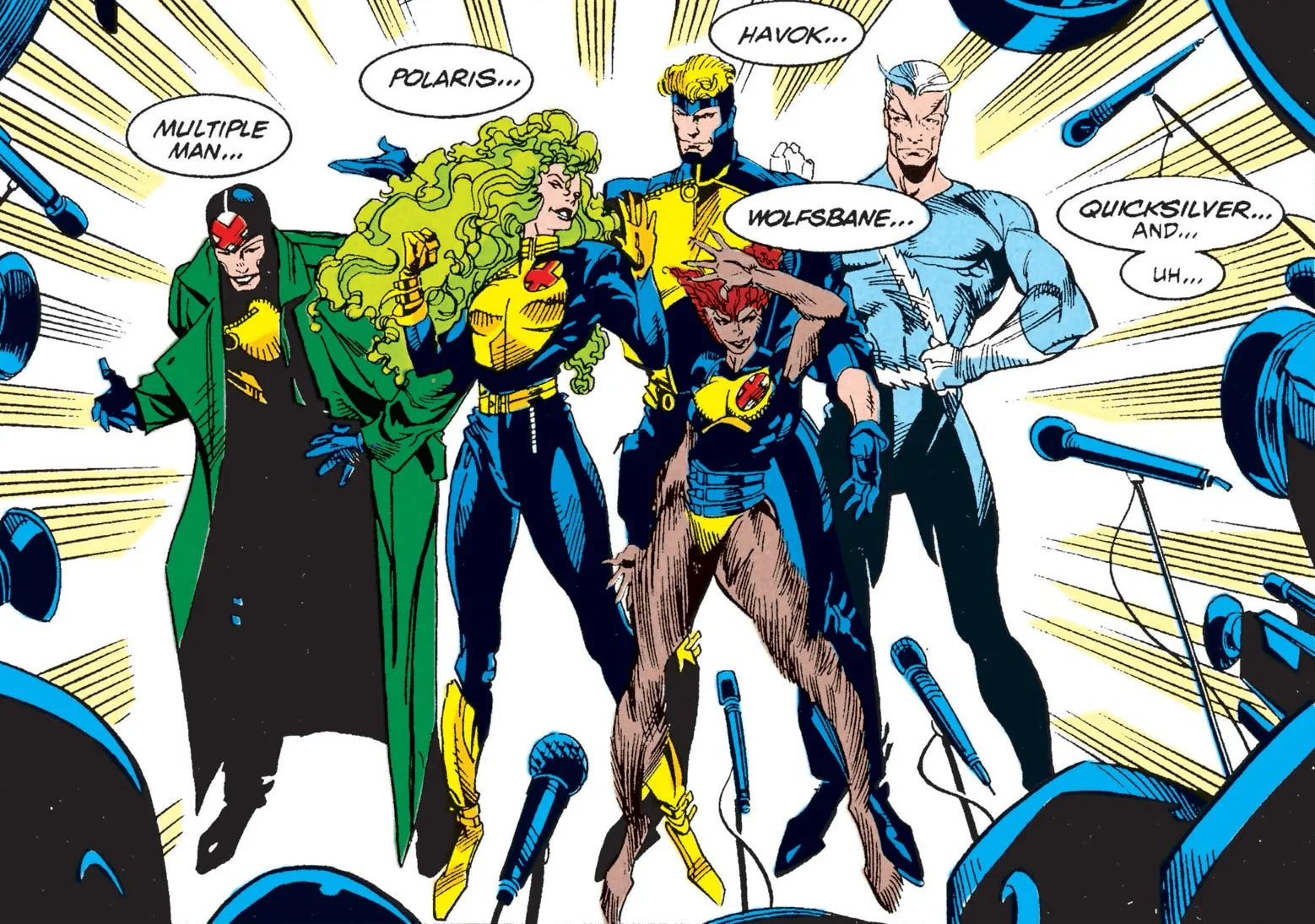
When the original members rejoined the X-Men, a government-sanctioned X-Factor rose in their place in X-Factor (1986) #71 by Peter David and Larry Stroman — the incarnation most relevant to X-Men '97 Season 2. After the villainous Freedom Force collapsed, government official Valerie Cooper recruited mutant heroes including Polaris, the heroic daughter of Magneto, alongside the super-strong Strong Guy, the self-duplicating Multiple Man, and the speedy Quicksilver. With some convincing from Professor X and Cyclops, the plasma-projecting Havok agreed to lead the team once he learned his ex-girlfriend Polaris was a member, and the lupine shapeshifter Wolfsbane followed him aboard.
The squad wrestled with the political and economic limits of government work, but grew into close friends and dependable X-Men allies. Their first mission pitted them against Mister Sinister and his Nasty Boys, while Magneto's zealous Acolytes later seized control of Cooper to manipulate Quicksilver. The rift deepened when the team discovered Val knew the government was developing mutant-hunting Sentinel robots.
Forge's X-Factor: Heroes and Villains Side by Side
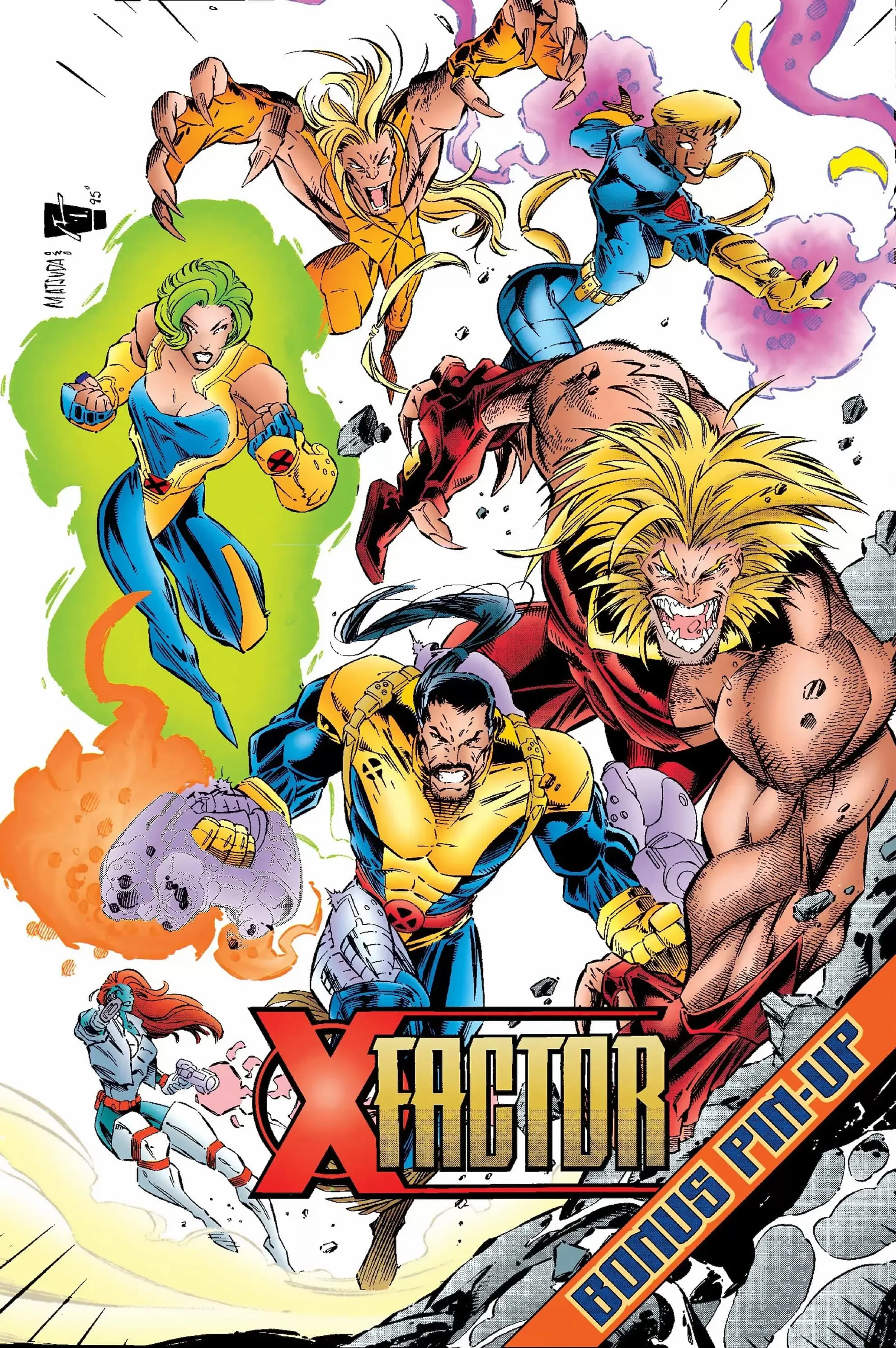
When Val Cooper became too compromised to run the team, the mutant inventor Forge stepped in as government liaison in X-Factor (1986) #94. Forge took charge after Havok was kidnapped and brainwashed by the Dark Beast, an alternate-reality genius with his own Brotherhood of Evil Mutants. While Polaris and Cooper remained constants, the roster added heroes like Wild Child and Shard — a hologram of the time-traveling Bishop's sister — but also welcomed longtime villains Mystique and Sabretooth into its ranks.
Just as Havok broke his mental programming and returned, Xavier's Underground Enforcers — allies of Shard from her future — traveled to the present hunting the criminal Trevor Fitzroy. One of them, Greystone, went mad and died in a time machine explosion that trapped Havok in a parallel reality, and the team splintered in the aftermath.
X-Factor Investigations: Mutant Noir
The team's most beloved reinvention traded government badges for detective licenses. Using game show winnings, Multiple Man opened a detective agency with Strong Guy and Wolfsbane in Madrox (2004) #1 by Peter David and Pablo Raimondi. The agency evolved into X-Factor Investigations in X-Factor (2005) #1, adding Monet St. Croix, Siryn, Rictor, and the mysterious Layla Miller. Focused on mutant-related cases, the agency worked with private citizens, X-Men teams, and the government alike.
Over the years the firm grew to include the hyper-adaptive Darwin and dimension-hopping aliens Longshot and Shatterstar, with Havok and Polaris even briefly at the helm. The agency's end was appropriately dramatic: after dying and being resurrected without a soul, Strong Guy briefly worked with Mephisto, became King of Hell, and killed Wolfsbane's son — shattering the team and scattering his teammates across time and space.

The All-New, Corporate-Sponsored X-Factor
X-Factor resurfaced as a corporate team in All-New X-Factor (2014) #1 by Peter David and Carmine Di Giandomenico. After buying the rights to the name from Madrox, Serval Industries recruited Polaris to lead; she enlisted Gambit, while Quicksilver volunteered to watch over his half-sister. The trio freed mutants being experimented on by A.I.M., and the roster grew to include Danger — the android who was once the X-Men's Danger Room — plus former New Mutants Cypher and Warlock during a confrontation with the Technarch aliens. The short-lived squad drifted apart after a few missions.

Krakoa's X-Factor: Investigating Mutant Deaths
During the Krakoan age — when mutantkind founded its own nation and cracked resurrection through a mix of cloning and telepathy — proof of death became bureaucratically essential. Polaris organized a new X-Factor to investigate mutant deaths in X-Factor (2020) #1 by Leah Williams and David Baldeon. Northstar joined to prove the death of his sister Aurora and bring her back, alongside the tracker Akihiro, the ever-vigilant Eye-Boy, super-genius Prodigy, and the telepathic Rachel Summers.
The team solved the murders of Aurora, Wind Dancer, and even their own Prodigy before being called to investigate the death of the Scarlet Witch at the Hellfire Gala in X-Men: The Trial of Magneto (2021) #1 — a death Wanda had secretly orchestrated herself as part of a mystical process to expand mutant resurrection. The squad disbanded when Krakoa fell.

Havok Reassembles X-Factor for the Social Media Age
With mutantkind scattered after Krakoa's fall, the American government built yet another X-Factor — this one designed to mint social media stars for an app called ClikClok. When the original lineup of Angel, Xyber, Frenzy, Feral, and Firefist was left injured or dead after its first mission, Havok, Pyro, the immortal Granny Smite, and the shield-generating Cecilia Reyes joined the survivors in X-Factor (2024) #1 by Mark Russell and Bob Quinn.
This roster battled the mutant mercenaries X-Term and the Mutant Underground — a pro-mutant group led by none other than Polaris. After Angel captured her, he and the team turned against General Mills, their government liaison, and demolished the operation entirely. Whether they answer to a government or a corporation, X-Factor's true loyalty has always been to the mutants they protect.

Why This Matters for X-Men '97 Season 2
The X-Factor arriving in X-Men '97 Season 2 draws on this long tradition of sanctioned mutant teams — and the timing is no accident. The official Season Two bridge comic establishes a world without the X-Men, with the government-run X-Factor rushing to fill the void. If the comics are any guide, expect tension between bureaucratic mandates and mutant loyalty to drive the story. Season 2 is streaming now on Disney+, and every era of X-Factor history above is available to read on Marvel Unlimited.