Hazy Skies Over the Magic Kingdom: A Saharan Dust Plume Is Rolling Into Florida This Weekend
A massive Saharan dust plume is reaching Florida and the Gulf Coast this weekend, bringing milky hazy skies, upper-90s heat, and lower rain chances to Central Florida. For Walt Disney World guests it means more sun strategy and the payoff of unusually vivid, photogenic sunsets over the parks Sunday and Monday.
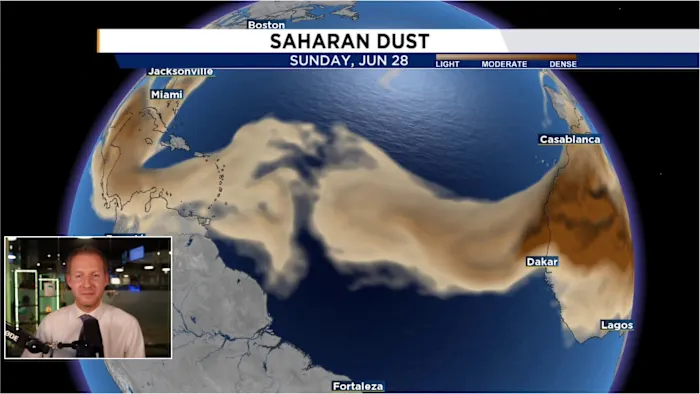
Disney World guests planning a late-June trip to Central Florida should expect milky skies, soaring heat, and unusually vivid sunsets this weekend, as a massive Saharan dust plume completes its several-thousand-mile journey across the Atlantic and brushes into the state. The annual Saharan Air Layer is making its first notable appearance of the season, dialing back rain chances, pushing highs into the upper 90s, and painting the sky over the parks in deeper reds and oranges at dawn and dusk.
Key Details
- What: The annual Saharan Air Layer (Saharan dust plume) drifting across the Atlantic
- Where: Florida and the Gulf Coast, with the thickest concentration aimed at Texas
- When in Florida: Dust nudges in Saturday into Sunday
- Heat: Highs in the upper 90s as rain chances drop to around 30%
- Best skies: Enhanced sunrises and sunsets expected Sunday and Monday
- Air quality: Most people unaffected; extremely sensitive groups may notice lower air quality
What the Saharan Dust Plume Means for a Walt Disney World Trip
For families heading to Walt Disney World this weekend, the practical takeaways are simple: it will be hot, it will be hazy, and it will be drier than a typical Central Florida summer day. The dry, dusty airmass is forecast to move in Saturday into Sunday, and as it settles over the region, rain chances are expected to fall to roughly 30% while afternoon highs climb into the upper 90s. That is a meaningful shift from the daily downpours guests usually plan around in late June.
The dust itself is typically suspended thousands of feet overhead, so most park visitors will only notice it as a milky haze hanging in the sky rather than anything they can feel on the ground. Forecasters note that the thickest part of the plume is aimed at Texas, where air quality stands to take the biggest hit, while Florida is expected to catch only the edge of it. Unless the dust gets unusually thick, the most obvious sign for guests strolling down Main Street, U.S.A. may simply be a paler, more washed-out blue overhead.
Heat, Haze, and Sun Strategy in the Parks
With rain chances suppressed, guests trade one summer hazard for another: relentless sun and heat. Upper-90s highs in the open, shadeless midways of the Magic Kingdom, EPCOT, and Disney's Animal Kingdom can feel considerably hotter once humidity and pavement are factored in. With fewer cooling afternoon storms in the forecast, the usual built-in breaks from the heat may not arrive on schedule.
That makes a few familiar Florida-summer habits more important than ever during this stretch:
- Carry water and refill often; ride lines and walkways offer little shade midday.
- Plan indoor, air-conditioned attractions and shows for the hottest afternoon hours.
- Pack sunscreen and hats — a hazy sky still lets plenty of UV through.
- Guests with allergies or respiratory sensitivities should keep medication handy, since gusty winds or a stray storm can drag dust toward the surface.
For the small subset of "extremely sensitive groups," forecasters say air quality could dip slightly, though most visitors will not be affected. Should an isolated thunderstorm break through the dry air, guests may even spot the dust's signature calling card — faint dirty residue left on cars, strollers, or outdoor furniture once the rain evaporates.
A Photographer's Dream: Vivid Sunsets Over the Parks
There is a genuine upside to all of this dust, and it is one Disney photographers will appreciate. Florida may see just the right amount of dust to enhance the sunrise and sunset on Sunday and Monday. When the sun sits low on the horizon, its light travels through more of the atmosphere and scatters, producing the rich reds, oranges, and pinks of a classic sky show. Introduce fine dust particles into that mix, and the scattering intensifies — deepening those colors into something especially photogenic.
For guests, that translates to a rare window for standout photos: a fiery sky behind Cinderella Castle, glowing color framing Spaceship Earth at EPCOT, or a dramatic sunset over Bay Lake and Seven Seas Lagoon. Early risers chasing a quiet rope-drop morning may be rewarded with an equally vibrant sunrise. It is the kind of natural lighting no parade or fireworks budget can manufacture, and it should peak right as the weekend crowds are looking for that perfect golden-hour shot.
What's the Deal With the Dust?
The Saharan Air Layer is a yearly phenomenon, and this is its first significant appearance over Florida this season. Each year around this time, meteorologists watch for Saharan dust to make its long trek across the Atlantic, carried west by the prevailing winds. It is best known for its role in suppressing tropical activity, thanks to its dry, dusty, and hot atmospheric conditions — a welcome trait for anyone keeping an eye on hurricane season.
Forecasters break the dust's effects into the good and the bad:
- Limits tropical development: During May, June, and July, when the dust is most prolific, it helps keep tropical systems at bay across this part of the world. Its impact tends to fade in August, September, and October.
- Amazon rainforest fertilizer: The dust cloud carries phosphorous, among other minerals, more than 5,000 miles across the Atlantic, often settling in the Amazon, where it helps fertilize the rainforest soil. The downside: that same nutrient load can fuel algae blooms and red tide.
- Poor air quality and dirty rain: The dust usually hangs between 5,000 and 20,000 feet up. Rain, thunderstorms, and gusty winds can drag some of it to the surface, aggravating allergies and affecting those with respiratory ailments, and can leave dirty marks behind when dust-laden raindrops evaporate.
- Vibrant sunrises and sunsets: As covered above, the extra particles scatter low-angle sunlight to enhance the sky's already vivid morning and evening colors.
The Buzz
This story is trending because it lands at the busiest moment of the Disney World summer, and the headline practically writes itself for park-goers: hazy skies, near-100-degree heat, and the promise of postcard sunsets all rolled into one weekend. Central Florida meteorologist coverage from ClickOrlando (News 6 Orlando) spelled out the timing and impacts in detail. Read the original forecast and tracking notes at ClickOrlando.
What This Means for Fans
For Disney fans on the ground this weekend, the Saharan dust plume is far more sunsets-and-sunscreen than storms-and-cancellations. The biggest changes guests will feel are the heat and the dip in rain chances, so the smart play is to hydrate aggressively, schedule indoor attractions through the hottest afternoon hours, and treat the hazy sky as a cue rather than a concern. The trade-off — fewer cooling showers — comes with a real reward: two evenings, Sunday and Monday, when the sky over the parks could turn into one of the most striking natural light shows of the summer. We'd keep a camera ready for golden hour and let the dust do the rest.