Essential Punisher Comics to Read Before Jon Bernthal's 'One Last Kill' on Disney+
Jon Bernthal returns as Frank Castle in A Marvel Television Special Presentation: The Punisher: One Last Kill, hitting Disney+ on May 12 — and the actor says it's shot almost frame-for-frame from the comics. Here's the five-decade Punisher reading list that shaped the special, from his Amazing Spider-Man debut to Garth Ennis' era-defining MAX run.
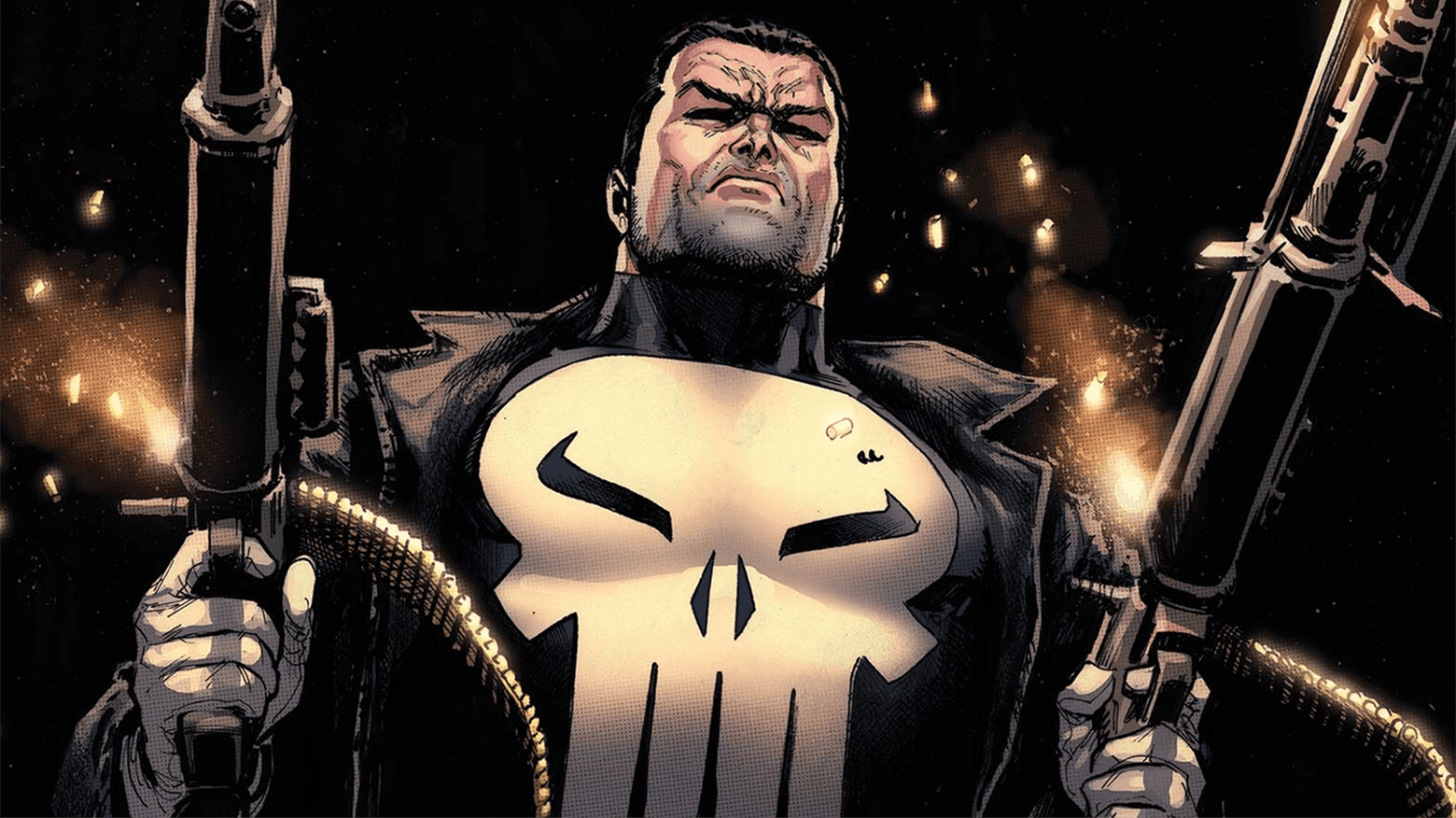
With A Marvel Television Special Presentation: The Punisher: One Last Kill arriving on Disney+ on May 12, Jon Bernthal returns to the role of Frank Castle in a story shot, in his words, almost frame-for-frame from the comics. To understand what makes the Punisher one of Marvel's most enduring anti-heroes, it helps to revisit the books the special is built on — five decades of stories that turned a one-off Spider-Man villain into the publisher's most uncompromising vigilante.
When combat veteran Frank Castle lost his family to mob violence, he dedicated the rest of his life to eliminating criminals so that no other family would suffer the same fate. His willingness to use lethal force has put him at odds with nearly every costumed hero in the Marvel Universe — and made him one of the most discussed, adapted, and re-invented characters in the publisher's catalog.

How to Watch
- What: A Marvel Television Special Presentation: The Punisher: One Last Kill
- When: May 12 at 6 p.m. PT
- Where: Disney+
- Star: Jon Bernthal as Frank Castle
Bernthal has been candid about how directly the special leans on the comics — specifically the Garth Ennis-era stories that defined the modern Punisher. The actor describes the new film as deliberately quiet and visually faithful, framed to look like the panels it adapts. With that in mind, here are the essential Punisher comics that shaped the character — and the special.
The Punisher Strikes Spider-Man
The Punisher made his comic book debut not stalking street-level criminals, but hunting Spider-Man in The Amazing Spider-Man (1963) #129 by Gerry Conway and Ross Andru. The villainous Jackal blamed Spidey for the recent death of Gwen Stacy and hired the Punisher to deliver retribution, convincing Frank that Spider-Man was a killer who deserved his particular brand of justice.
The misunderstanding came to blows across the rooftops of Manhattan, with Spider-Man barely surviving the Punisher's onslaught. Eventually Spidey helped Frank realize Jackal was manipulating him, and the new vigilante walked away — but the issue planted the seeds of his military background and tragic origin that later writers would expand on.

The Punisher's Backstory Revealed
After several supporting appearances, Frank finally took center stage in Marvel Preview (1975) #2 by Gerry Conway and Tony DeZuniga. The issue dove into his tragic backstory, revealing his service with the U.S. Marines during the Vietnam War and recounting the murder of his family that pushed him onto a violent path. The framing story sent Frank from New York to Chicago to investigate a criminal conspiracy that had claimed an old war buddy.
More than just an origin, this issue established several enduring tropes — most notably Frank's habit of recording his observations in a "war journal," documenting plans of attack and lessons learned on each mission. He may have been introduced in Amazing Spider-Man, but he became the Punisher fans recognize today in this issue.

The Punisher Meets Daredevil
Beyond Spider-Man, the Punisher also has a long and complicated history with Daredevil. Frank Castle and Matt Murdock first crossed paths in Daredevil (1964) #183 by Roger McKenzie, Frank Miller, and Klaus Janson, when the Man Without Fear attacked the Punisher to stop him from using excessive force on criminals. Despite the early skirmish, Frank offered to team up — on the condition they did things his way. Daredevil firmly refused.
The dynamic escalated in Daredevil (1964) #184, with Daredevil shooting and wounding the Punisher to stop him from killing a drug dealer who preyed on kids. From there he talked the dealer's victims out of similarly killing the dealer themselves, insisting on legal channels. This kicked off the complex push-and-pull between the two heroes — Frank as a constant reminder of what Matt could become if he ever crossed the line.

Circle of Blood: The First Solo Series
After years as an adversary for Spider-Man and Daredevil, Frank Castle finally headlined his own series with The Punisher (1986) #1 by Steven Grant and Mike Zeck. The five-issue miniseries — known as "Circle of Blood" — saw Frank freed from prison by a shadowy organization called the Trust, which had captured and brainwashed criminals (including his old nemesis Jigsaw) to wage their own copycat war on crime.
After being betrayed, the Punisher faced their hit squad in a grueling battle and reminded the Marvel Universe that there is only one Punisher — and he wasn't looking to make friends or inspire imitators. Pushing Marvel into darker, edgier '80s storytelling, "Circle of Blood" cemented itself as a memorable first starring title for Frank.

Punisher's War Journal
Frank's popularity exploded after his solo debut, and he was soon headlining multiple titles simultaneously. Punisher War Journal (1988), launched by writer Carl Potts and superstar artist Jim Lee, set the tone for how the Punisher would look and feel for much of the '90s. Potts and Lee collaborated on most of the series' first 19 issues, adding a quintessential chapter to the vigilante's legacy.
These stories pushed beyond gritty crime thrillers and pulled Frank further into the wider Marvel Universe. In addition to taking down scores of criminals, the Punisher crossed paths with Daredevil, Wolverine, Spider-Man, and Black Widow — sometimes as an ally, sometimes as an obstacle.

Welcome Back, Frank
The celebrated creative team of Garth Ennis and Steve Dillon took Frank Castle back to basics with the iconic 2000s Marvel Knights story "Welcome Back, Frank." Following a brief stint as an avenging angel, Frank reclaimed his mortality and his identity as the Punisher, returning to New York to dismantle the Gnucci crime syndicate. Mob boss Ma Gnucci recruited a private army — including the Russian — to take Frank down.
Starting in Punisher (2000) #1, Ennis and Dillon wove dark humor through the brutal crime-fighting Frank had become known for. The story not only highlighted his appeal but presented familiar facets in fresh ways, kicking off Ennis's longstanding association with the character.
Punisher MAX
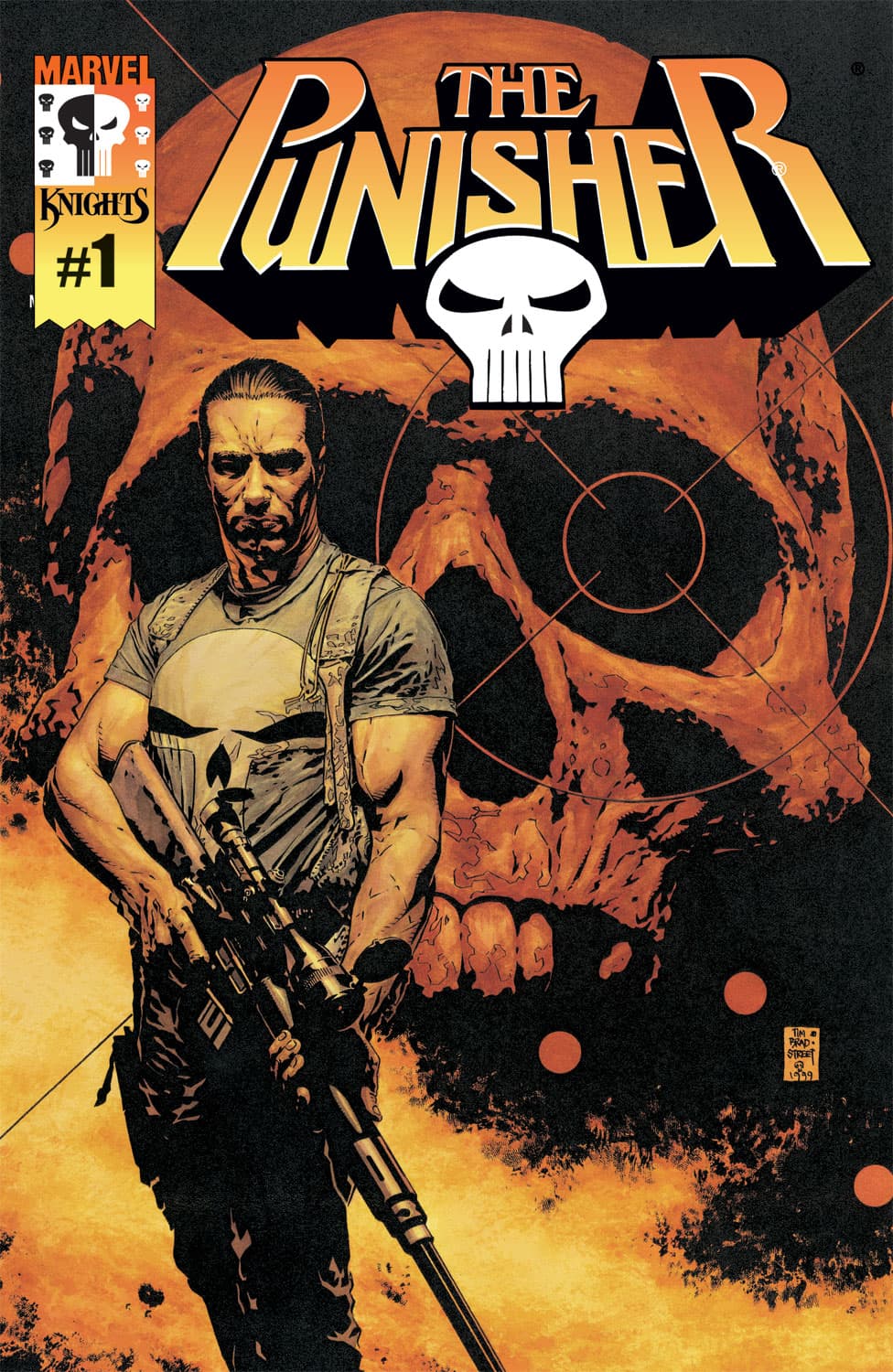
Punisher MAX (2004) #1 by Garth Ennis and Lewis Larosa took the mature themes and intense storytelling associated with the character to another level. Far removed from the colorful main Marvel Universe, this series unfolded in a reality where Frank Castle's brutal justice was the only line of defense for the vulnerable. The series opened with the Punisher dismantling a powerful mafia outfit before turning his attention to other criminal organizations and shady institutions.
Ennis wrote 60 issues of Punisher MAX and didn't pull his punches, taking Frank from common crooks and white-collar criminals in New York City to top-secret operations abroad. This is the run Bernthal explicitly cites as the spine of One Last Kill, and the reason he describes the special as "deep and cutting psychologically."

A New Entry: War Journal Returns
Meanwhile, in the main Marvel Universe, the Punisher kept a low profile until his explosive return in Punisher War Journal (2006) by Matt Fraction and Ariel Olivetti. While staking out his latest targets, Frank found himself drawn into the events of Civil War (2006), deciding to help Captain America's resistance against the Superhuman Registration Act. As his profile rose, he fought super villains more regularly, even bringing an untimely end to Stilt-Man at the start of the series.
Across the 26-issue run, Fraction and his rotating artistic collaborators re-established Frank's place in the wider world, giving the Punisher a role in seismic Marvel events such as World War Hulk (2007) and Secret Invasion (2008). Frank also made time for personal vendettas — including a vicious rematch against Jigsaw and the takedown of an organization using his image to serve their own agenda.

The Punisher's War on Crime
When acclaimed writer Greg Rucka took the reins on The Punisher (2011), fans knew they were in for a thrilling ride. Alongside superstar artist Marco Checchetto, Rucka explored the mark left by the Punisher on the Marvel Universe through the perspective of those who crossed his path — including recent widow Rachel Cole-Alves, whose wedding party had been massacred by mob violence, leading her to join Frank's war on crime.
Elevated by Checchetto's haunting artwork, the story didn't keep the Punisher's activities isolated from the rest of the Marvel Universe. Frank worked with Spider-Man and Daredevil to keep a hard drive containing valuable information on organizations like Hydra and A.I.M. from falling into the wrong hands.

War Machine: Punisher's Boldest Upgrade
Though Frank Castle usually prefers conventional weaponry, he considerably upgraded his arsenal in The Punisher (2016) #218 by Matthew Rosenberg and Guiu Vilanova. When a rogue state seized control of a S.H.I.E.L.D. outpost and came into possession of a spare War Machine armor, Nick Fury approached the Punisher to handle the matter decisively and discreetly. Once Frank had completed the mission, he kept the power armor for himself — rebranding it with his usual Punisher iconography.
As he took his shadow war to a global scale, Frank's bolder tactics drew the attention of the Super Hero community. Captain Marvel took the lead in getting him to stand down, resulting in the Punisher coming to blows with several major heroes as they tried to retake the deadly armor. The story served as a stark reminder that Frank will go to lethal lengths to get the job done — especially when he's holding one of the most powerful weapons in the Marvel Universe.

What This Means for Marvel Fans
Bernthal's pitch for One Last Kill — "shot almost frame to frame," with the volume able to come down because the story is told through the visuals — only lands if you understand the page-craft of the books he's adapting. The five-decade arc above is why the Punisher remains one of Marvel's most argued-about characters: he started as a Spider-Man foe, became a window into Daredevil's worst impulses, and through Ennis, Rucka, Fraction, and others, evolved into one of the publisher's sharpest tools for stories about violence, justice, and grief.
If you're new to Frank Castle and want a primer before pressing play, "Welcome Back, Frank" and the early issues of Punisher MAX are the most direct on-ramps to the version of the character Bernthal is playing. A Marvel Television Special Presentation: The Punisher: One Last Kill hits Disney+ on May 12 at 6 p.m. PT.